Vegan & Black
  • CONVERSATION
  • OUR STORY
  • MERCH
  • CONTACT
@ToBeVeganandBlack | Culinary Storytelling from the Black Vegan Perspective

A SMALL PROJECT WITH BIG MEANING.

The Black Vegan Tale
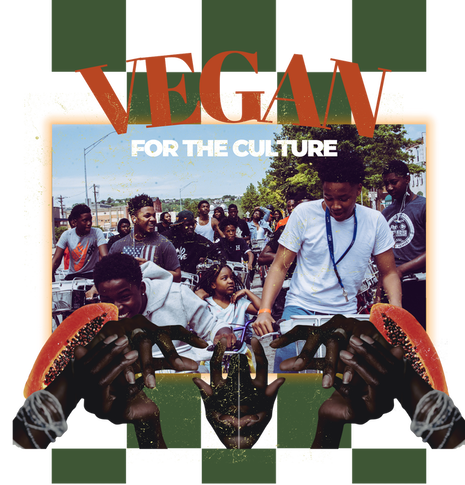
This project is headed by a Black vegan/Black vegans who are well aware of how counter-culture it is to be a vegan in both the Black community, as well as in society as a whole. We started it to bring to light why it is such a big deal for Black vegans to exist, considering the history of this country, and even current economical and health issues many people of color face.
Picture

THE MISSION.

The mission of To Be Vegan & Black is to highlight the culinary aspects of Black culture through a vegan lens. We are interested in building and strengthening Black food culture through veganism by promoting and educating on plant-based options. We desire to understand and retain the core values of Black culinary culture, and attempt to present alternatives without erasing these core values or their cultural significance.
Our vision is for this site, our social media platforms, and the community that we help to build to be a vegan home base for information and inspiration that is relevant to the Black community and the diaspora. 
We vow to be uplifting, supportive, encouraging, empathetic, and always well seasoned. We will ensure that the information we present is fact-based and well researched to the best of our ability. We want to hear from our Black Vegan community and present content to the vegan world that will serve as a strong compilation of thoughts and insight on Black food culture.
Picture
Vegan is defined as: "... A philosophy and way of living which seeks to exclude—as far as is possible and practicable—all forms of exploitation of, and cruelty to, animals for food, clothing or any other purpose; and by extension, promotes the development and use of animal-free alternatives for the benefit of animals, humans and the environment. In dietary terms it denotes the practice of dispensing with all products derived wholly or partly from animals." (www.vegansociety.com)
​
Being plant-based is considered as consuming forms that are sourced from plants without necessarily identifying with other aspects of Veganism, such as avoiding wearing leather.


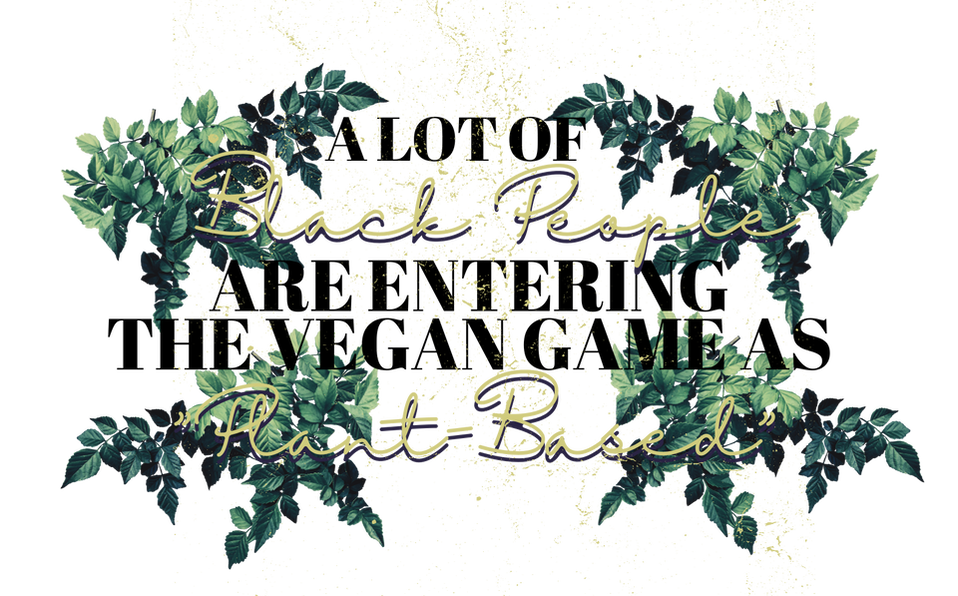
These choices likely have to do with the fact that Black converts are typically seeking the health benefits, and then maybe identifying with the more environmental benefits later. Historically, in Black communities, health hasn't been the priority, survival has. Yes everyone loves junk food, regardless of race, everyone can ALWAYS enjoy something sweet or greasy. It tastes great, it makes you happy, and for the most part it’s cheap. Historically though, the food staples in Black cooking have been based on ingredients that are mainly oil and sugar, and in Black neighborhoods, there often isn’t access to much else. So what are you going to do? You’re gonna eat what you can get your hands on.


PROPER NUTRITION.

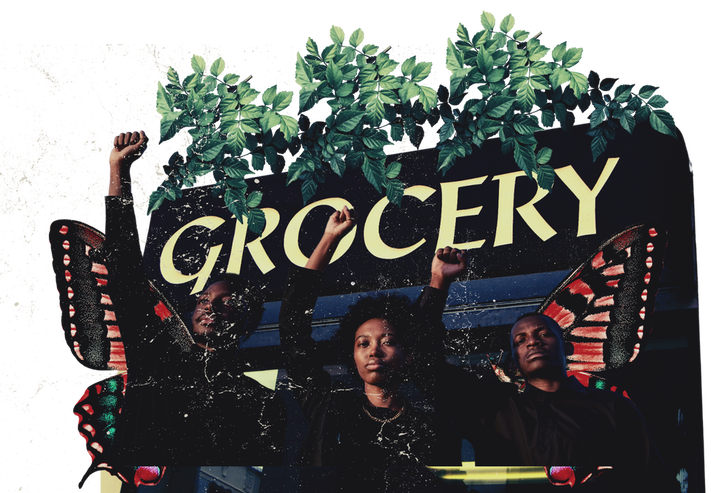
Proper nutrition is directly related to a higher quality of life. However, with food deserts being predominantly in Black communities (which means that there may not be a grocery store or restaurant providing fresh, non-processed food options for miles), this quality of living is harder to obtain.  These food deserts correlate with years of oppression, lack of neighborhood funding, and low income rates.


"Food deserts are also a dis­pro­por­tion­ate real­i­ty for Black com­mu­ni­ties, accord­ing to a 2014 study from Johns Hop­kins Uni­ver­si­ty. The study com­pared U.S. cen­sus tracts of sim­i­lar pover­ty lev­els and found that, in urban areas, Black com­mu­ni­ties had the fewest super­mar­kets, white com­mu­ni­ties had the most, and mul­tira­cial com­mu­ni­ties fell in the mid­dle of the super­mar­ket count spectrum". (www.aecf.org)


Picture
Picture
​Black food culture has deep running roots that, of course, began in enslavement, and have since majorly influenced American food trends. Most of this food culture, due to the food scraps designated to enslaved Black people, revolves around fatty, greasy, and generally unhealthy animal products and food preparation. Fast forward into the Jim Crow era, and you'll find racist ridicule and stereotyping of Black diets that put down the culture the grandchildren of slaves had adopted as their own. It was all they had, and it became a vital part of their new identity as free Black people in America. As the decades rolled on, Soul Food, as it began to be called, is at the center of most Black gatherings, and has even come to include foods from parts of the Caribbean Islands and West Africa.

DECOLONIZATION.

As discussed in a moving article from www.thegrio.com, Veganism is a way for Black people to reclaim Soul Food, from the oppressive food system a large portion of the Black population are forced to live under. The premise of Soul Food is based in animal products, and ingredients that are cheap, accessible, and often lacking in nutritional value. This premise was established when slave owners/masters kept the richest of food options for themselves and their families, while only offering slaves his throw-aways. Veganism can challenge this way of thinking (the idea that Soul Food still should be prepared like throw-away food) by returning the nutritional value that any human being deserves back into their meals, while maintaining the flavor, sense of community, and symbolism of today's Black culture.
​

A great article on the true story of slavery

Picture
Picture

ROOM FOR DISCUSSION.

Black vegans have existed for years, but the massive increase in the amount of Black vegans is only beginning. With the vegan landscape diversifying more and more, it is only fair that we have a conversation about inclusivity. Unfortunately, the vegan and even "hippie" landscape is promoted as being predominantly White, though this representation doesn't show the whole story. Advocacy falls short of human rights issues, and finding value in racial conversations, keeping it from being put on the same level as animal rights and preserving the environment. If a part of vegan philosophy is the respect and preservation of all living things, then more intention should be put behind properly representing all vegans, which means facilitating a safe environment for Black expression, the telling of Black stories, and of supportive alliances. 

​
Picture

Follow us on Instagram!

Email: [email protected]
Powered by Create your own unique website with customizable templates.
  • CONVERSATION
  • OUR STORY
  • MERCH
  • CONTACT